Who Is a Good Candidate for Robotic Surgery?
When your doctor mentions that surgery is the best step forward, it is completely natural to feel a mix of hesitation and concern. For decades, the thought of an operation brought to mind wide incisions, lengthy stays in a hospital bed, sharp post-operative pain, and weeks away from your career and family life.
Modern medicine has changed this experience dramatically. With the emergence of minimally invasive surgery, operations that once required large cuts can now be completed through keyhole openings measuring just a few millimeters. At the forefront of this transformation is robotic-assisted surgery.
Across Chennai, patients from Anna Nagar, Vadapalani, K K Nagar, Porur, and the OMR IT corridor are discovering that robot-assisted procedures provide an easier path to healing. However, a crucial question remains for anyone facing a potential operation: Am I actually eligible for this procedure?
Not every surgical patient requires robotic intervention, and not everyone is an immediate match for it. Determining who makes ideal robotic surgery candidates involves a careful look at your specific condition, your general fitness, anatomical factors, and your personal recovery goals.
This comprehensive guide breaks down the eligibility criteria for robot-assisted operations, explains when this technology offers the greatest advantage, highlights where traditional methods are still preferred, and walks you through what to expect during a specialized clinical evaluation.
What Makes Robotic Surgery Different?
To understand whether you are a suitable candidate, it helps to understand what the technology actually does.
A common myth is that an independent mechanical robot operates on you while the medical team watches from a distance. That is completely untrue. In robotic-assisted procedures, the surgeon remains in total control from start to finish.
The surgeon sits at an ergonomic console a few feet away from the operating table. From this station, the surgeon views the operative field in high-definition, three-dimensional vision magnified up to ten times. When the surgeon moves their fingers, hands, and wrists, sensitive computer controls translate those exact movements in real time into microscopic, steady actions performed by robotic arms inside the patient.
These robotic instruments have wristed joints that rotate 360 degrees, allowing them to bend and navigate through tight pelvic or abdominal spaces with zero natural hand tremor.
Core Robotic Surgery Benefits
Patients who qualify for robot-assisted procedures gain major clinical advantages:
- Tiny incisions (typically 8 to 12 millimeters) instead of long surgical cuts.
- Significantly reduced blood loss, which lowers the need for donor blood transfusions.
- Preservation of delicate nerves, blood vessels, and healthy surrounding muscle tissue.
- Far less post-operative soreness, reducing the need for strong pain medications.
- Shorter hospital stays, with many patients going home within 24 to 48 hours.
- A much quicker return to regular work, gentle exercise, and household routines.
- Minimal, faint scarring that fades cleanly over time.
Key Factors That Determine Eligibility for Robotic Surgery
Assessing eligibility for robotic surgery is a structured clinical process. Surgeons evaluate several core criteria before recommending a robot-assisted approach over standard laparoscopy or open surgery.
The Nature and Location of the Disease
Robotic systems deliver their greatest value when operating inside deep, narrow, or structurally complex areas of the body where human hands or rigid laparoscopic rods struggle to maneuver safely.
If your condition involves localized tissue, early to mid-stage tumors, or delicate reconstructive work around nerves and blood vessels, you are likely an exceptional candidate.
General Anesthetic Fitness
Robot-assisted abdominal and pelvic operations require general anesthesia and a technique called insufflation. Insufflation involves introducing medical-grade carbon dioxide into the body cavity to gently lift the abdominal wall, creating a clear space for the 3D camera and instruments to work safely.
Good candidates must have adequate lung and heart health to tolerate general anesthesia and this slight abdominal pressure while positioned comfortably on the operating table.
Body Mass Index (BMI) and Tissue Considerations
A common question among patients is whether being overweight rules them out. In truth, robotic surgery is often safer for individuals with higher body mass index values than open surgery.
In traditional open operations on patients with higher body weight, large incisions carry a heightened risk of wound infection, poor healing, and incisional hernias. Robotic arms provide steady mechanical leverage through tiny ports, sparing the abdominal wall from heavy retraction while providing crisp visibility through deep tissue layers.
History of Prior Surgeries and Scar Tissue
Having had a previous abdominal or pelvic surgery does not automatically disqualify you. However, previous open operations can leave behind fibrous internal bands known as adhesions. During your pre-operative assessment, your surgical team will review your surgical history and imaging scans to check if these adhesions can be safely negotiated using wristed robotic tools.
UNIFAI Hospitals: Center of Excellence in Surgical Gastroenterology
When you are exploring robotic treatment options in Chennai, choosing a center with focused specialization makes all the difference in your surgical outcome.
Conveniently located near Saligramam and K K Nagar, UNIFAI Hospitals has established itself as an innovative, ethical healthcare institution dedicated to advanced minimally invasive care. While UNIFAI supports comprehensive robotic surgical programs across urology, gynecology, and surgical oncology, its primary and most celebrated clinical anchor is Surgical Gastroenterology.
Why Surgical Gastroenterology Patients Are Prime Robotic Surgery Candidates
The digestive tract is among the most intricate anatomical systems in the human body. From the esophagus, stomach, and liver down through the gallbladder, pancreas, small intestine, colon, and rectum, these organs sit deep within the abdomen and pelvis. They are wrapped in dense blood supplies, fragile mucosal linings, and complex autonomic nerve webs that regulate bladder control, digestion, and sexual function.
At UNIFAI Hospitals, the Department of Surgical Gastroenterology specializes in treating complex digestive and abdominal conditions using robot-assisted platforms:
- Colorectal Cancers and Polyps: Patients with rectal or sigmoid colon tumors are prime candidates for robotic surgery. In the narrow confines of the human pelvis, robotic wristed tools allow UNIFAI’s gastrointestinal surgeons to remove tumors with clear margins while safeguarding the micro-nerves that control urinary continence and sexual function.
- Complex and Recurrent Hernias: Individuals suffering from large incisional, ventral, or recurrent groin hernias make excellent candidates. Robotic instruments allow surgeons to suture supportive mesh behind the abdominal muscle wall with pinpoint accuracy, drastically lowering recurrence rates.
- Gastrointestinal Stromal Tumors (GIST) and Stomach Tumors: Patients requiring partial gastrectomies or delicate tumor removals benefit from the high-magnification 3D camera, which enables clear tissue separation without disturbing the remaining stomach anatomy.
- Gallbladder and Bile Duct Conditions: Patients dealing with complicated gallstone disease, acute inflammation, or biliary tract strictures are evaluated for robotic removal and reconstruction, avoiding accidental injury to nearby liver arteries.
- Severe Gastroesophageal Reflux Disease (GERD): Patients with hiatus hernias and persistent reflux who no longer respond to medication are ideal candidates for robotic anti-reflux fundoplication.
- Bariatric and Metabolic Needs: Individuals requiring sleeve gastrectomy or gastric bypass benefit from safe, minimally traumatic tissue stapling through keyhole entries.
By maintaining a dedicated focus on Surgical Gastroenterology, UNIFAI Hospitals ensures that gastrointestinal patients regain normal digestive motility quickly, experience minimal dietary interruption, and return home with tiny incision sites that heal rapidly.
Are You a Candidate? Specialty-by-Specialty Breakdown
Beyond digestive tract diseases, robot-assisted procedures serve patients across multiple major surgical fields. Here is how candidacy is determined across common specialties.
Urology Candidates
Urology is one of the foundational fields of robotic surgery. You are likely an ideal candidate if you present with:
- Localized Prostate Cancer: Candidates for radical prostatectomy benefit enormously. The robotic wristed arms can dissect cancerous prostate tissue away from microscopic nerve fibers, preserving urinary control and sexual potency.
- Kidney Tumors (Partial Nephrectomy): Patients with small to moderate kidney growths who wish to preserve their remaining healthy kidney function.
- Pelviureteric Junction (PUJ) Obstruction: Patients needing reconstructive pyeloplasty to clear blockages where urine flows from the kidney to the bladder.
Gynecology Candidates
Women experiencing non-cancerous or early-stage cancerous pelvic conditions are frequent candidates for robotic approaches:
- Uterine Fibroids (Myomectomy): Women who wish to preserve their uterus for future pregnancies make prime candidates. Robotic tools allow surgeons to remove deeply buried fibroids and carefully rebuild the uterine muscle wall layer by layer.
- Endometriosis: Patients with severe, deep-infiltrating endometriosis where diseased tissue binds to the ovaries, fallopian tubes, bladder, or bowel.
- Hysterectomy: Women requiring uterine removal for persistent adenomyosis, severe bleeding, or early endometrial cancer.
- Pelvic Organ Prolapse: Patients needing robotic sacrocolpopexy, where a supportive mesh is placed to restore pelvic organ alignment.
Surgical Oncology Candidates
Cancer care requires removing malignant tumors completely along with neighboring lymph node basins, all while shielding adjacent organs from harm:
- Early to Mid-Stage Solid Tumors: Cancer patients whose tumors have not invaded multiple distant organ systems make prime candidates for minimally invasive robotic resection.
- Lymph Node Dissections: Patients requiring precise lymph node clearance in the pelvis, abdomen, or thorax benefit from high-definition 3D visualization that distinguishes lymph tissue from major vascular channels.
Orthopedic Candidates
In joint replacement surgery, robotic systems assist orthopedic surgeons in customizing bone cuts:
- Severe Knee Osteoarthritis: Adults suffering from chronic knee stiffness and cartilage breakdown who have exhausted non-surgical options like physical therapy or injections.
- Partial Knee Replacement: Patients whose joint degeneration is confined to only one compartment of the knee, allowing the healthy bone and ligaments to remain untouched.
Who Might NOT Be an Ideal Candidate?
While robotic surgery is versatile, patient safety always comes first. There are clinical scenarios where traditional open surgery or standard non-surgical management remains the safer, more appropriate choice.
Patient Scenario | Clinical Reason Why Robotic Surgery May Not Be Chosen | Recommended Alternative |
Severe, Emergency Trauma | Active, massive internal bleeding requires immediate, direct physical access to clamp vessels within seconds. | Emergency open surgery |
Severe Cardiopulmonary Failure | Patients with severe end-stage COPD or congestive heart failure may not tolerate prolonged insufflation pressure. | Open surgery or medical management |
Widespread, Distant Metastasis | Extensive stage IV cancer involving multiple organ systems cannot be cleared through localized keyhole ports. | Systemic chemotherapy, immunotherapy, or palliative care |
Extensive Dense Adhesions | Extreme scar tissue fusing all abdominal organs together can make safe port entry difficult. | Open surgical adhesiolysis |
Severe Uncorrectable Bleeding Disorders | Inability to clot blood normally presents safety hazards during laparoscopic port insertion. | Medical hematology management prior to surgical review |
Your surgeon will always weigh these considerations frankly to ensure that whichever surgical path is chosen gives you the safest outcome.
Preparing for Your Robotic Surgery Consultation
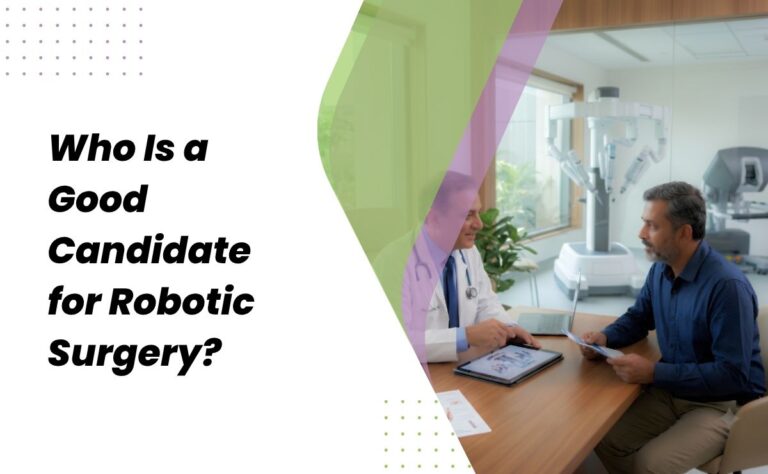
Determining your suitability begins with an in-depth robotic surgery consultation. If you are scheduling a consultation with a specialist in Chennai, taking a few organized steps will help you get the most out of your appointment.
What to Bring to Your Appointment
- Diagnostic Imaging: Bring original CD discs and printed reports of your recent ultrasound, CT, MRI, or PET scans.
- Endoscopy or Colonoscopy Reports: Especially important if you are consulting for digestive or gastrointestinal conditions.
- Biopsy or Pathology Reports: If your condition involves an evaluation for a tumor or abnormal growth.
- Current Medication List: Include blood thinners, blood pressure tablets, diabetes drugs, and supplements.
- Medical History Summary: Details of any previous operations, chronic conditions, or past reactions to anesthesia.
Essential Questions to Ask Your Surgeon
During your consultation, do not hesitate to ask detailed questions:
- Am I an ideal candidate for a robot-assisted procedure, or should I consider standard laparoscopic or open surgery?
- What specific clinical benefits will robotic precision offer for my condition?
- How many robot-assisted procedures of this exact kind have you performed?
- How many days will I stay in the hospital, and what will my recovery timeline look like at home?
- Does the hospital assist with health insurance pre-authorization and cashless mediclaim support?
Health Insurance and Cost Considerations in Chennai
Understanding the financial side of your care helps eliminate unnecessary worry so you can focus entirely on your health.
In India, the Insurance Regulatory and Development Authority of India (IRDAI) mandates that health insurance providers cover modern treatments, explicitly including robot-assisted surgeries, when medically necessary.
Leading hospitals maintain dedicated insurance and TPA support desks to assist patients with paperwork, verify policy limits, and secure cashless pre-authorizations before admission.
Is the Investment Worth It?
While robotic operations carry a moderate consumable expense compared to conventional surgery due to specialized single-use wristed instruments, the overall investment is balanced by tangible advantages:
- Reduced Bed Charges: Shorter hospital stays save multiple days of room rent, nursing fees, and daily monitoring charges.
- Fewer Medications: Less post-operative pain and lower infection rates translate to lower pharmacy expenses.
- Lower Risk of Complications: Avoiding wound infections, incisional hernias, or emergency readmissions prevents unplanned medical bills.
- Rapid Return to Work: Getting back to your professional duties weeks earlier protects your livelihood and minimizes lost productivity.
Life After Surgery: What Recovery Feels Like
The First 24 Hours
- You will wake up in a modern recovery room with small dressings over your keyhole ports.
- Soreness is usually mild, often compared to the feeling of muscle tightness after exercise.
- Most patients sit upright within hours, drink water, and take gentle assisted steps across the room by the next morning.
Days 2 to 4
- Normal digestion resumes rapidly, especially for patients treated in Surgical Gastroenterology.
- You transition to a soft, nutritious diet.
- Most individuals are cleared for discharge to the comfort of their own home within 48 hours.
Weeks 1 to 3
- Incisions heal cleanly into subtle marks.
- You can manage light household tasks, short neighborhood walks, and personal care independently.
- Patients who work desk-based or computer jobs in areas like Guindy, T Nagar, or Sholinganallur often resume light remote work within 7 to 10 days.
Weeks 4 to 6
- Internal tissues settle firmly into place.
- Your specialist will typically clear you to resume active morning walks, driving, gym exercises, and normal physical routines without restriction.
Frequently Asked Questions
Can elderly patients be candidates for robotic surgery?
Yes. Age alone is not a barrier. In fact, elderly patients often benefit significantly from robotic surgery because their bodies endure far less physical shock, minimal blood loss, and lower infection risks, allowing them to regain mobility much faster than with open surgery. Candidacy depends on overall heart, lung, and organ fitness rather than birth year.
Does robotic surgery leave large scars?
No. Robotic surgery uses small keyhole cuts measuring only 8 to 12 millimeters. Once healed, these marks fade into faint, subtle lines that are barely noticeable, unlike the long, prominent scars left by open abdominal procedures.
How do I know if my condition is too complex for robotic surgery?
Complexity is often the main reason to choose robotic surgery rather than avoid it. The wristed instruments and high-definition 3D magnification allow surgeons to carry out delicate dissections and reconstructive work that would be extremely challenging through conventional laparoscopic techniques. A thorough evaluation with an experienced robotic surgeon will determine whether your specific anatomy is suitable.
Will insurance cover my robotic surgery in Chennai?
Yes. Under IRDAI directives, Indian health insurance plans cover modern treatments, including robotic-assisted surgery, when recommended by a qualified doctor for medical indications. It is always advisable to check your policy’s specific terms regarding consumable caps or co-pay requirements prior to your planned procedure.
Taking Your Next Step Toward Gentle Healing
Undergoing surgery is a major health milestone, but you no longer need to face painful, disruptive recoveries. By replacing large incisions with high-magnification 3D visuals, tremor-free robotic arms, and millimeter-level accuracy, robot-assisted procedures allow patients to overcome serious medical conditions with dignity, comfort, and speed.
If you have been advised to undergo an operation for a digestive condition, hernia, gallbladder problem, urological disorder, or pelvic illness, taking the time to consult a specialized surgical team is the best choice you can make.
Centers like UNIFAI Hospitals in Saligramam, Chennai, bring together advanced surgical suites, experienced specialists, and dedicated leadership in Surgical Gastroenterology to help you achieve a safe, gentle, and lasting recovery.
Schedule a consultation with a qualified robotic surgical specialist today, discuss your eligibility with confidence, and choose the modern path that helps you return quickly to the life you cherish.